Dinner advice often assumes you have unlimited time, a fully stocked refrigerator and the desire to measure everything. Most weeknights offer none of those things.
You can still build a varied, satisfying meal without counting calories or following a rigid plate diagram. Start with three jobs that dinner needs to do:
- include a vegetable or fruit;
- provide a meaningful protein food;
- include a satisfying staple, often a whole grain or starchy vegetable.
Then add flavor and a beverage that make the meal feel complete.
This is a planning framework, not a medical diet or a rule about exact portions. Appetite, culture, budget, activity and health needs vary.
The three-part dinner framework
Part 1: Produce
Choose one or more vegetables, with fruit as an easy addition when vegetables are limited.
Fresh is not required. The Dietary Guidelines for Americans, 2025–2030 recognizes frozen, dried and canned vegetables and fruits as useful choices, particularly when they contain no or very limited added sugars.
Fast options include:
- frozen broccoli or mixed vegetables;
- canned no-salt-added tomatoes;
- bagged salad;
- carrots or snap peas;
- microwaved frozen peas;
- fruit that needs no preparation.
The best choice on Wednesday is often the one that removes friction.
Part 2: Protein
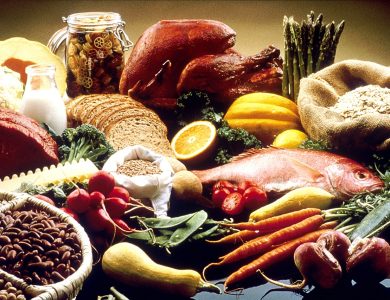
Protein foods include seafood, meat, poultry, eggs, beans, peas, lentils, nuts, seeds and soy foods. That gives dinner more range than “cook a chicken breast.”
Low-effort examples:
- eggs;
- canned or cooked beans;
- lentils;
- tofu;
- leftover chicken;
- frozen fish fillets;
- plain yogurt used in a sauce;
- nuts or seeds added to a grain bowl.
Beans, peas and lentils can do double duty: USDA guidance includes them in both the Protein Foods and Vegetable groups because of their nutrient profile.
See USDA’s overview of protein foods.
Part 3: A satisfying staple
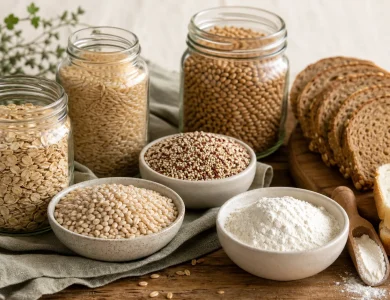
This is the part that makes dinner feel like dinner. Whole grains are one option; potatoes, corn and other starchy vegetables can also fill the role.
Useful staples include:
- brown rice, barley or quinoa;
- whole-wheat pasta;
- oats in a savory bowl;
- whole-grain bread or tortillas;
- potatoes or sweet potatoes;
- corn;
- a mixed grain-and-bean dish.
The current Dietary Guidelines prioritizes fiber-rich whole grains and lists a general goal of two to four whole-grain servings per day for many adults, adjusted for individual energy needs. A serving example in the accompanying federal guide includes half a cup of cooked oats, brown rice, barley, quinoa or buckwheat, or one slice of bread.
That is context, not a requirement that every dinner contain a grain.
Use “one cooked, two easy” on busy nights
The three parts do not all need separate recipes.
Pick one component to cook and make the other two almost automatic:
- Cook salmon; microwave frozen vegetables; reheat cooked brown rice.
- Cook pasta; stir in canned beans; add bagged spinach until wilted.
- Cook eggs; toast whole-grain bread; serve sliced tomatoes or fruit.
- Cook a sheet pan of vegetables; add rotisserie chicken; serve with bread.
- Cook rice; top with tofu and frozen stir-fry vegetables.
This is more realistic than starting three pans at once.
Five dinners built from the same framework
1. Pantry tomato and white-bean pasta
Combine whole-wheat pasta, canned tomatoes and white beans. Add frozen spinach or another vegetable. Season with olive oil, garlic and herbs.
The beans provide protein; pasta supplies the staple; tomatoes and spinach cover produce. No side dish is necessary unless you want one.
2. Egg, vegetable and toast plate
Make scrambled or fried eggs. Add sautéed frozen vegetables and whole-grain toast. Fruit works well when the vegetable portion is small.
This is breakfast food only if you decide it is.
3. Flexible grain bowl
Start with a cooked grain. Add beans, tofu, fish or leftover meat, then use whatever vegetables need attention. Finish with a sauce made from yogurt, tahini, salsa or a vinaigrette.
The structure stays the same while the flavors change.
4. Loaded baked potato
Top a baked potato with beans, vegetables and plain yogurt or cheese. Add fruit or a small salad if available.
The potato is the staple; the toppings turn it into a meal.
5. Soup plus something substantial
Add beans, lentils, chicken or tofu to a vegetable soup. Serve it with whole-grain bread or leftover rice.
If you use packaged soup, compare sodium across similar serving sizes on the Nutrition Facts label.
Portion without turning dinner into a test
Exact portions are not universal. Instead of weighing food, begin with a reasonable plate and notice what happens.
- Are you still physically hungry after eating?
- Was the meal satisfying, or did it feel like a collection of “healthy” compromises?
- Did one component crowd out everything else?
- Do you need more food on highly active days?
You can adjust the next serving based on experience. People managing diabetes, kidney disease, gastrointestinal conditions, food allergies or a prescribed therapeutic diet may need more specific guidance from a qualified clinician.
Flavor is part of the plan
Meals fail when the nutrition framework is treated as the finished recipe.
Choose a flavor direction:
- lemon, olive oil and herbs;
- salsa, lime and cumin;
- soy sauce, ginger and sesame;
- curry powder and yogurt;
- tomato, garlic and basil;
- tahini, lemon and pepper.
Salt, sauces and cheese can all contribute sodium, so the Nutrition Facts label is useful when comparing packaged options. But “lower sodium” is not a substitute for making food enjoyable enough to eat.
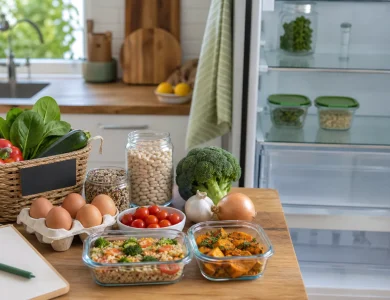
Keep four emergency components
A practical kitchen benefits from foods that can wait for the night when plans collapse:
- one frozen vegetable;
- one shelf-stable protein such as beans or lentils;
- one quick staple such as oats, pasta, rice or bread;
- one strong flavor such as salsa, curry paste, pesto or a favorite spice blend.
Those four items can create several dinners with minimal waste.
The bottom line
A balanced weeknight dinner does not need a calculator.
Give the meal three parts—produce, protein and a satisfying staple—then choose only one part that requires real cooking. Vary the ingredients across the week, use frozen and canned foods when they make dinner more likely, and adjust portions to your appetite and circumstances.
The useful meal is the one you can repeat without dreading it.
Sources and review notes
- Dietary Guidelines for Americans, 2025–2030
- Daily Servings Guide for the 2025–2030 Dietary Guidelines
- USDA MyPlate: Protein Foods
- USDA MyPlate: Vegetables
- FDA: Daily Value on Nutrition Facts Labels
This article provides general educational information, not individualized nutrition or medical advice.