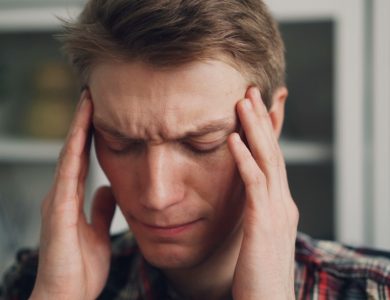
Where a Caffeine Headache Typically Hurts
If you’re trying to match your symptoms right now, here’s the short answer: a caffeine headache almost always sets up shop in the front of your head. You’ll feel it across your forehead, pressing behind your eyes, and creeping into both temples. According to Cleveland Clinic neurology resources, the pain is typically bilateral — hitting both sides at once — and dull or throbbing rather than sharp.
Here’s the typical progression of where you’ll feel it:
- Forehead first. A heavy, pressing ache right above the brow line is the hallmark starting point.
- Behind the eyes. Many describe a pulsing pressure that feels like it’s pushing outward from the eye sockets.
- Across the temples. The throb spreads sideways, often syncing with your heartbeat.
- Back of the head or full “band.” In more severe withdrawal — typically 24–48 hours in — the pain wraps around the skull like a tight headband.
One important distinguishing feature: caffeine headaches are rarely strictly one-sided. If your pain is locked to a single side, pulses intensely with light or sound, or comes with nausea and aura, you’re more likely dealing with a migraine. Sinus headaches, by contrast, concentrate lower — around the cheekbones, nose bridge, and upper teeth — and worsen when you bend forward. Caffeine pain stays high and central.
What a Caffeine Headache Actually Feels Like
Location is half the picture; the quality of the pain is the other half. If your head feels like a slow, heavy drumbeat that gets louder when you stand up too fast, you’re in caffeine-withdrawal territory. The signature sensation is a dull, diffuse, throbbing ache — not a sharp stab, not a tight band, but a deep pulsing that worsens with movement, bending over, or climbing stairs. According to the International Classification of Headache Disorders (ICHD-3), caffeine withdrawal headache is specifically characterized by this bilateral, pulsating quality in people who regularly consume more than 200 mg of caffeine per day (roughly two 8-oz cups of brewed coffee).
The onset is gradual, not sudden. It typically builds over 12–24 hours after your last dose and peaks 24–48 hours in, which is why weekend headaches catch so many people off guard.
You’ll usually notice a cluster of symptoms riding along with the pain:
- Fatigue and brain fog — tasks that normally take 10 minutes feel like 30
- Irritability and trouble concentrating
- Mild nausea, occasionally with appetite loss
- Light or sound sensitivity, but noticeably milder than a true migraine
If your pain is one-sided, stabbing, comes with vomiting, or makes light genuinely unbearable, that pattern leans migraine, not withdrawal.
Caffeine Headache vs. Migraine, Tension, and Sinus Pain
To rule out something scarier, it helps to compare the four most common headache types side by side. According to the American Migraine Foundation, roughly 39 million Americans live with migraine — so if your pain feels truly debilitating, that’s a real possibility worth distinguishing from a simple caffeine crash.
Migraine typically hits one side of the head with severe, pulsing pain, often paired with nausea, light sensitivity, or visual aura (zigzag lines, blind spots). It lasts 4 to 72 hours and usually stops you from functioning.
Tension headaches feel like a tight band squeezing both sides of your head — pressure, not throbbing. No nausea, no aura. Stress, screen time, and bad posture are the usual triggers.
Sinus headaches concentrate pain around your cheeks, nose, and brow, and get noticeably worse when you bend forward. Expect congestion, facial tenderness, or a recent cold.
Caffeine headaches sit across the forehead on both sides, throb gently to moderately, and — this is the giveaway — track directly to when you missed or cut your usual dose.
| Type | Location | Quality | Trigger | Duration |
|---|---|---|---|---|
| Caffeine | Bilateral, frontal | Throbbing, dull | Missed/reduced intake | 2–9 days |
| Migraine | One-sided | Severe pulsing | Varies; often hormonal/sensory | 4–72 hours |
| Tension | Band around head | Pressure, steady | Stress, posture | 30 min–7 days |
| Sinus | Cheeks, nose, brow | Pressure, worse bending | Infection, allergies | Days to weeks |
If your pain matches row one and you skipped your usual cup, caffeine is almost certainly the culprit.
Why Caffeine Withdrawal Causes Head Pain
Caffeine doesn’t just wake you up — it physically squeezes the blood vessels in your brain. Research published in the Journal of Headache and Pain notes that caffeine reduces cerebral blood flow by roughly 20–30% in regular consumers. When you skip your usual dose, those vessels rebound and dilate, flooding the brain with blood. That surge stretches pain-sensitive nerve endings in the vessel walls, which is exactly why the ache tends to throb in time with your pulse.
There’s a second mechanism layered on top. Caffeine normally blocks adenosine, a neurotransmitter that signals fatigue and dials up pain sensitivity. After weeks of consumption, your brain compensates by producing more adenosine receptors. Pull the caffeine, and that backlog of adenosine binds freely — leaving you groggy, foggy, and more sensitive to pain than usual.
This is why 2–4 cup-per-day drinkers get hit hardest: enough exposure to upregulate receptors, but not so much that a missed cup goes unnoticed. The threshold is lower than most people assume — as little as 100 mg of caffeine per day (roughly one 8-ounce coffee) for two weeks is enough to trigger withdrawal symptoms when you stop. It’s a predictable physiological response, not a warning sign of anything more serious.
How Long a Caffeine Headache Lasts
Here’s the timeline you actually want: most caffeine headaches resolve within a week, and many fade in 2–4 days. According to the ICHD-3 classification, the pain typically begins 12–24 hours after your last dose, peaks at 24–48 hours, and lasts anywhere from 2 to 9 days if untreated.
A few factors stretch that window:
- High baseline intake (think 400+ mg/day, or roughly 4 cups of brewed coffee)
- Abrupt cessation instead of a gradual taper
- Dehydration, which amplifies the vascular rebound
- Poor sleep, which lowers your pain threshold
This also explains the classic weekend headache. If you normally caffeinate by 7 a.m. on weekdays and then sleep until 10 a.m. Saturday, your brain has gone roughly 15–16 hours without its usual dose — squarely inside the 12–24 hour withdrawal window. Same biology, just triggered by an alarm clock instead of a quitting decision.
If your pain is still escalating past day three, or you’re hitting day ten with no improvement, that’s outside the typical withdrawal curve and worth a call to your doctor.
Should You Drink Coffee or Avoid It Right Now?
Here’s the paradox that’s probably bothering you mid-headache: caffeine causes withdrawal pain, but caffeine also relieves it. Both are true, and the right move depends entirely on your goal.
If you want the pain gone: drink a small dose — roughly half a cup of coffee, or about 50–100 mg of caffeine. Relief typically kicks in within 30–60 minutes as blood vessels in your brain re-constrict to their usual diameter. This isn’t a trick; it’s the same mechanism behind why Excedrin contains 65 mg of caffeine per tablet alongside acetaminophen and aspirin.
If you’re actively trying to quit: push through. The pain is real but finite — usually 2 to 9 days, peaking around days 1–2. Drinking coffee now resets the clock.
If you haven’t started quitting yet, taper instead of going cold turkey. Reduce your intake by about 25% every 2–3 days. Most people avoid withdrawal headaches entirely this way.
While you wait it out, bridge with:
- Hydration: 16–20 oz of water on waking, since caffeine is a mild diuretic
- Sleep: withdrawal fatigue amplifies headache perception
- OTC relief: ibuprofen (200–400 mg) or acetaminophen (500–1000 mg)
One caution: avoid caffeine-containing painkillers like Excedrin if you’re trying to quit. According to Consumer Reports, frequent use of combination analgesics can trigger medication-overuse rebound headaches, trapping you in a loop worse than the withdrawal itself.
Red Flags: When the Headache Isn’t From Caffeine
Caffeine withdrawal is uncomfortable, but it shouldn’t be terrifying — and a few specific symptoms mean you need to stop self-diagnosing and get evaluated. The American Headache Society flags several patterns as “do not wait” scenarios, and they apply whether you’ve had coffee that morning or not.
Get emergency care if any of these show up:
- Thunderclap onset — pain that peaks within 60 seconds and feels like the worst headache of your life. This can signal a brain bleed.
- Neurological symptoms — one-sided weakness, numbness, vision loss, slurred speech, or confusion alongside the headache.
- Fever, stiff neck, or a new rash — possible meningitis, which moves fast.
Schedule a same-week visit with a physician if:
- The pain doesn’t ease with caffeine reintroduction, hydration, rest, or standard OTC analgesics within 24–48 hours.
- Withdrawal-style headaches persist beyond 9–10 days after your last caffeinated drink. Genuine caffeine withdrawal resolves inside that window for roughly 90% of people, per clinical reviews.
- You’re over 50 with no prior headache history, or your headache pattern has clearly changed in frequency, location, or intensity.
Caffeine is a common culprit, but it’s not the only one. When the pain looks unfamiliar — different location, different quality, different rhythm than your usual — treat that as data, not noise.
Preventing Future Caffeine Headaches
The good news: caffeine headaches are one of the most preventable pain patterns in adult life — they almost always come from inconsistency, not caffeine itself. A few habits keep them off your calendar entirely.
- Keep your daily dose steady. Same time, same amount, weekends included. The classic “Saturday morning headache” happens because you slept in and pushed your usual 7 a.m. cup to 10 a.m. — your brain doesn’t take days off.
- Taper, don’t quit cold. If you’re cutting back, drop intake by about 25% per week. A 4-cup-a-day habit becomes 3, then 2, then 1 over a month — usually with zero withdrawal pain.
- Hydrate aggressively. Caffeine is mildly diuretic, and dehydration amplifies withdrawal throbbing. Aim for a glass of water alongside every caffeinated drink.
- Audit hidden sources. Green tea (30–50 mg), a 12-oz cola (35–45 mg), dark chocolate, pre-workout powders (150–300 mg), and even some OTC pain relievers like Excedrin (65 mg per tablet) all count toward your total.
- Know your ceiling. The FDA considers up to 400 mg per day — roughly four 8-oz brewed coffees — safe for most healthy adults without escalating dependence.