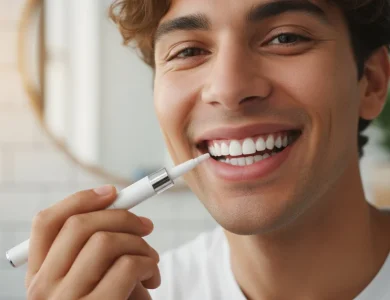
The Short Answer: What One Strip Actually Does
Yes — one whitening strip can produce a real, measurable shade change, but it’s almost certainly smaller than what you’re seeing in the mirror right now. On a standard VITA dental shade guide (the 16-tab tool dentists use to grade tooth color), a single session of an over-the-counter strip typically shifts teeth less than half a shade. That’s a change a hygienist might catch with a guide held up to your canine, not something a coworker will notice across a conference table.
Here’s the honest part: most of the dramatic “wow” whiteness you see right after peeling the strip off is temporary dehydration, not finished bleaching. The peroxide gel dries out the enamel’s surface, which scatters light and makes teeth look chalky-bright for a few hours. Once saliva rehydrates the tooth, that flash effect fades — and what remains is the chemical shade change, which is much subtler.
Peroxide whitening is cumulative. One strip starts an oxidation reaction inside the enamel that needs repeated sessions to break down enough stain molecules to register visually. Consumer Reports testing and most major strip manufacturers converge on the same timeline: noticeable results show up between days 3 and 7 of consistent daily use, with full results closer to the end of a 10–20 day kit.
The Dehydration Illusion vs. Real Peroxide Whitening
To understand why that first-glance result feels so dramatic, you have to separate two things happening at once under the strip. When peroxide gel sits against your enamel for 30 minutes, it temporarily pulls moisture out of the porous outer layer of your teeth. Dehydrated enamel scatters light differently, turning chalky, opaque, and noticeably brighter. Dental researchers and outlets like Consumer Reports have flagged this “rebound effect” for years.
That illusion fades within 2 to 24 hours as saliva rehydrates the enamel and the translucency returns. Your teeth will look like they “darkened” overnight — they didn’t. They went back to baseline, plus a tiny bit of real progress.
Actual peroxide whitening is a slower chemical process: hydrogen or carbamide peroxide diffuses through enamel and oxidizes the long-chain stain molecules trapped in the dentin underneath. Breaking those molecules into smaller, lighter-reflecting pieces takes repeated exposure — typically 10 to 20 sessions for a visible shade jump.
How to tell what’s real:
- Don’t judge results 5 minutes after removing the strip.
- Compare your teeth 24–48 hours later, in the same lighting, ideally against a photo taken before you started.
- Expect a subtle half-shade shift after one use — genuine, but nothing like the box photo.
The dehydration glow is what tricks people into thinking strips work overnight, then doubling up and burning their gums.
A Realistic Day-by-Day Whitening Timeline
Once you know the first-day brightness is mostly an illusion, the rest of the kit follows a predictable arc. Here’s the timeline most drugstore strips actually follow.
- Day 1: Subtle brightness that’s mostly dehydration, not real whitening. Mild tingling is normal; sharp zings are not.
- Days 2–3: The cumulative peroxide effect kicks in. Surface stains from coffee, tea, and red wine begin oxidizing and lifting. Still subtle in the mirror.
- Days 4–7: This is when you’ll likely see a real shade change — usually 1–2 shades on a standard dental shade guide. Close friends might notice; strangers won’t yet.
- Days 10–14: Full-course results for most drugstore kits in the $25–$55 range. Consumer Reports testing on at-home whitening systems consistently shows the biggest jump happens in this back half of the treatment.
- Post-treatment: Your shade stabilizes about a week after your last strip, once enamel fully rehydrates. Teeth often look slightly less bright than on the final day — that’s normal, not regression.
If you’ve got a wedding, headshot, or first date on the calendar, start your strips 10–14 days out at minimum, and finish at least 2–3 days before so any temporary gum irritation or sensitivity has time to calm down.
Why Your First Strip May Have Underwhelmed You
If the mirror gave you a shrug instead of a wow, the strip probably isn’t a dud — five specific things are working against you, and none of them are your fault.
Your starting shade. Teeth with yellow or brown undertones bleach faster because peroxide oxidizes those pigments efficiently. Gray-toned teeth, often from aging dentin or old tetracycline exposure, barely budge after one session and sometimes need 4–6 weeks to show real change.
Your stain type. Extrinsic stains from coffee, tea, red wine, and tobacco sit on the enamel surface and lift relatively quickly. Intrinsic stains — fluorosis, tetracycline, trauma, or thinning enamel that reveals yellow dentin underneath — respond slowly or not at all to over-the-counter peroxide.
Strip placement. Air bubbles, gaps near the gumline, or strips that don’t cover your canines and premolars leave untreated zones. Run a clean finger along the strip after applying to press out bubbles.
Peroxide concentration. According to Consumer Reports testing, drugstore strips typically contain 5–10% hydrogen peroxide, while in-office treatments run 25–40%. That gap is why one drugstore strip can’t replicate one dentist visit.
Your bathroom lighting. Cool fluorescent or LED bulbs cast a blue tint that flatters teeth; warm incandescent makes them look yellower. Check your shade in natural daylight near a window for an honest read.
Red Flags to Avoid After an Underwhelming First Use
The most common mistake after an underwhelming first strip isn’t quitting — it’s overcorrecting. Consumer Reports has flagged misuse of over-the-counter whitening products as a leading driver of preventable tooth sensitivity complaints, and almost all of it traces back to a few impatient moves.
Here’s what to avoid before you reach for that second strip:
- Don’t wear strips longer than the box says. Leaving a 30-minute strip on for 60 doesn’t bleach deeper — it demineralizes enamel, which can make teeth look duller and more translucent at the edges.
- Don’t double up. Two strips stacked or two sessions in one day won’t accelerate results. Peroxide has a saturation ceiling, and anything beyond it irritates soft tissue.
- Treat these symptoms as stop signs, not speed bumps: sharp “zinging” pain when you inhale cold air, white blanched patches on your gums (those are chemical burns), or lingering ache hours after removal.
- If mild sensitivity shows up, alternate days. Consecutive-day use on already-irritated teeth is how a 10-day kit turns into a two-week recovery.
- Skip the DIY stacking. Charcoal powders, baking soda scrubs, and abrasive “whitening” toothpastes during the same window strip the rehardening layer your enamel needs between sessions.
The strips work on a fixed biological timeline, and pushing harder doesn’t shorten it — it usually extends it by forcing you to take recovery days you hadn’t planned for.
How to Tell If the Strips Are Actually Working for You
Your bathroom mirror is the worst judge of whitening progress — it’s biased, the lighting shifts, and your teeth are wet half the time. If you want an honest read on whether the strips are doing anything, you need a controlled comparison, not a vibe check.
Here’s the method Consumer Reports-style testers and most cosmetic dentists rely on:
- Shoot a baseline photo before strip one. Natural daylight near a window, teeth dried with a tissue, neutral wall behind you, no filter, no smile-stretching.
- Re-photograph every 2–3 days at the same time of day, same window, same distance. Same-day photos are useless — dehydration whitens teeth temporarily and rebounds within 2–24 hours.
- Use a fixed reference in the frame. Hold a plain sheet of printer paper near your mouth, or compare against the whites of your eyes. A drugstore VITA-style shade guide ($8–$15) works even better if you want precision.
- Track sensitivity in the same log. Note any tingling, gum tenderness, or cold sensitivity on a 0–3 scale. If shade is shifting and sensitivity is climbing slightly, the peroxide is actively engaging your enamel — that’s a working product, not a defective one.
After 6–8 days of photos, you’ll see the truth.
When Strips Won’t Work — and When to See a Dentist
There’s a harder truth no whitening box prints on the front: peroxide cannot bleach certain teeth, no matter how many strips you stack on top of each other. Crowns, veneers, composite fillings, and bonding stay exactly the shade your dentist matched them to — so if you have a front-tooth restoration, your natural enamel may lighten around it and leave a visible mismatch.
Strips also struggle with intrinsic discoloration — staining from tetracycline exposure, childhood trauma, fluorosis, or genetics. These shadows live inside the dentin, not on the enamel surface where peroxide acts. Gray-toned teeth respond far less than yellow- or brown-toned teeth; Consumer Reports has noted yellow stains are the most peroxide-responsive of the bunch.
Talk to a dentist before your next box if you have:
- Pre-existing sensitivity or gum recession
- Untreated cavities or cracked enamel
- Pregnancy or breastfeeding status
- Visible restorations on front teeth
If you finish a full 14-day course and genuinely see no change in natural daylight, another $35–$60 box won’t rescue the result. That’s your signal to price out in-office whitening ($300–$800), custom take-home trays ($200–$500), or — for a single dark tooth — internal bleaching. Spending $120 on three more drugstore kits to chase a result the first one couldn’t deliver is the most common money-waster in at-home whitening.
What to Do Right Now After Your First Strip
Step away from the mirror — your next hour matters more than another worried glance at your teeth. Here’s the protocol that protects the work the peroxide started:
- Rinse with plain water, not mouthwash. Alcohol-based rinses can aggravate freshly opened enamel pores. Wait 30 minutes before brushing, and go gentle when you do.
- Avoid staining foods and drinks for at least 1 hour, ideally 24. That means coffee, red wine, tea, tomato sauce, berries, curry, and dark sodas. Your enamel is temporarily more porous, so stains absorb faster right now.
- Take a baseline photo in natural light against a white background. Shade changes of 1–2 levels are nearly invisible day-to-day but obvious across a 10-day comparison.
- Commit to the full course — typically 10–14 days for drugstore kits in the $25–$55 range. Judging results after one strip is like judging a haircut halfway through the trim.
- Have an event coming up? Count backward and finish 2–3 days early. Never double up in the final 48 hours; you’ll show up with sensitive teeth and irritated gums, not a brighter smile.
One underwhelming session is the rule, not the exception. The product isn’t broken, and neither are your teeth.